What to buy first, at any budget Draft
You do not need to buy everything at once. Start with $50 and add a step when you can. Each step builds on the one before it, water first.
Prices are for a household of two, before tax, and vary by store. Plain-text version

Light and a charged phone
A power outage of a few days: light to move around by, and phones that stay on for alerts and calls.
About $100 of $100. This step adds about $52. Each extra person adds about $13 to this step.
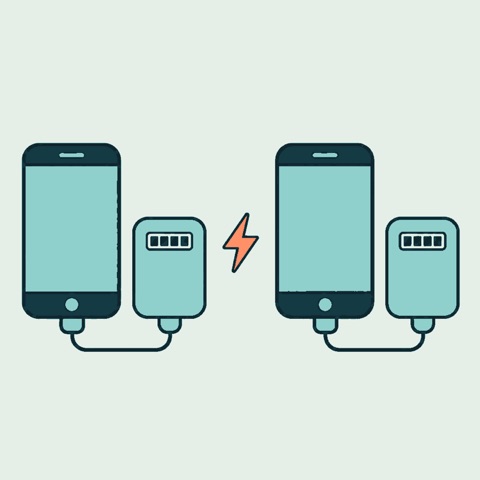
A 10,000 mAh power bank, kept charged
Two to three full phone charges. Check your model against the recall list at cpsc.gov/Recalls. Several power banks, including some from well-known brands, were recalled for fire risk in 2025.
- About
- $18
- Where
- Direct from the brand
- More on the checklist
- Keep a charged power bank for each phone
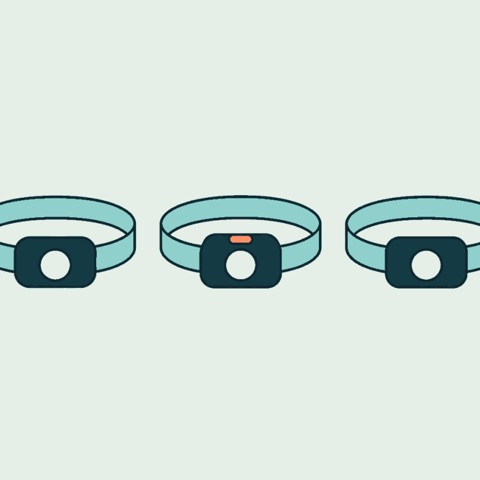
A headlamp for each person
Hands-free light that is safer than candles. A basic two-pack is enough to start.
- About
- $14
- Where
- Hardware or drugstore
- More on the checklist
- Get a headlamp for each person
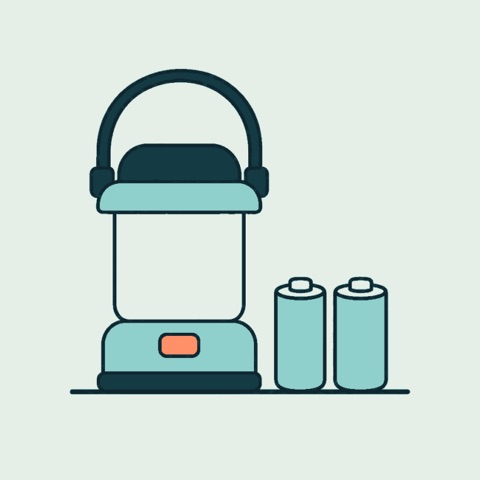
A pack of AAA batteries for the headlamps
Lithium batteries keep far longer in a drawer than alkaline ones.
- About
- $9
- Where
- Hardware or drugstore
- More on the checklist
- Add a lantern and spare batteries
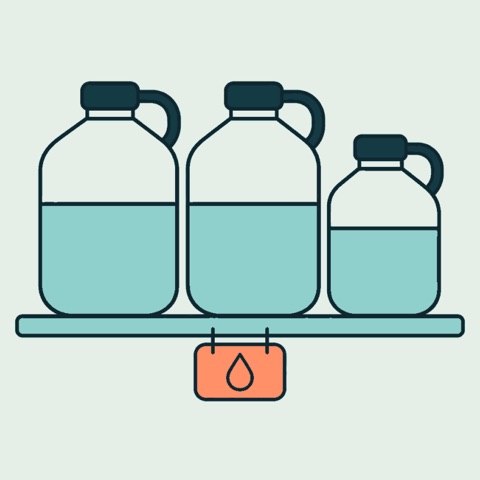
8 more gallons of water, to reach a week
Brings two people to a week of water, the amount the free check aims for.
- About
- $11
- Where
- Grocery store
- More on the checklist
- Store drinking water
Before you spend anything: $0
These cost nothing.
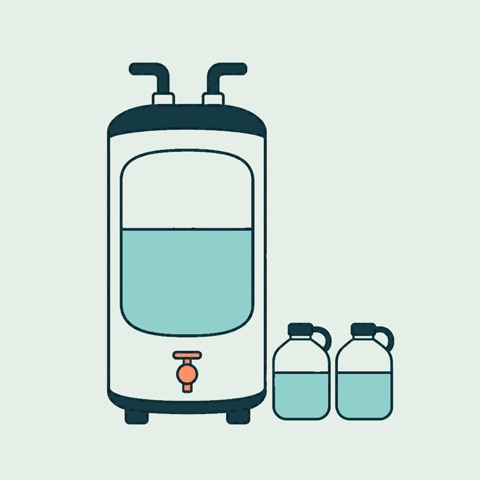
Count the water in your water heater
Your water heater already holds a reserve of clean water. Learn how to drain it before you need it.
How: Turn off its gas or power and let it cool. Close the cold-water valve on top, open a hot tap in the house, then fill clean containers from the drain valve at the bottom.
Choose an out-of-area contact
Long-distance calls often connect when local lines are jammed.
How: A relative or friend in another state. Everyone texts them where they are. Texts often get through when calls don't.
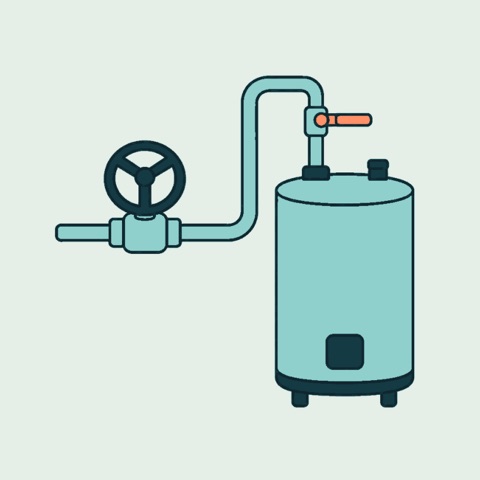
Find the water main and the water heater valve
So you can stop a leak fast after a quake.
How: Look where the water pipe enters the house, often in the garage or near an outside faucet, or in the meter box at the curb. Turn it clockwise to close. The water heater valve is on the cold pipe at the top.
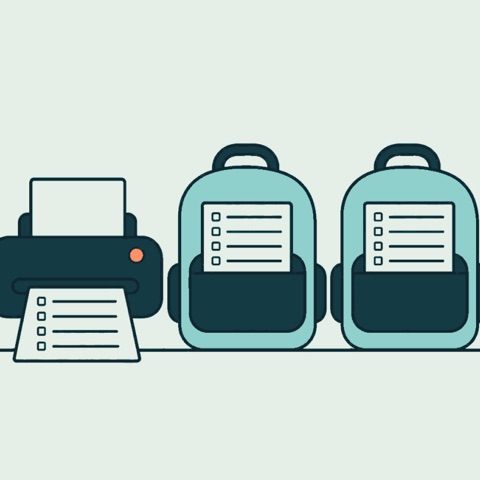
Print the family list for every bag
Names, numbers, and meeting places on paper. In an emergency, nobody remembers phone numbers.
Pick two meeting places
One near home and one outside the neighborhood.
How: Near home: a tree or corner on your block. Outside the neighborhood: a library, school, or relative's home.
Turn on two-factor for your email
Email resets every other account, so it comes first. Use a passkey or a security key if it's offered, then an authenticator app. Use text-message codes only where nothing else is offered.
How: Gmail: Google Account, Security, 2-Step Verification. Outlook: account.microsoft.com, Security. iCloud: Settings, your name, Sign-In & Security. Add a passkey or security key if offered.
Keep a week of medications
Pharmacies can close or run short. Keep a reserve of each prescription and a written list of doses.
How: Ask your pharmacist how to build a spare week. Many plans allow a refill a few days early each month. Keep the list of doses with it.
Past $500
- A power station (about $200 to $300) if anyone uses a CPAP or other powered medical device.
- A go-bag for each person: a backpack you own, a second power bank, a whistle, and copies of your documents.
- Pets: 7 to 10 days of their food and water, and a carrier by the door.
Stretch the money
- Buy one or two extra cans with each regular shop, and eat the oldest first. A week of food builds up in about a month.
- Refill clean soda bottles with tap water for free, and replace them every 6 months.
- Count the water already in your water heater: 30 to 80 gallons most homes forget they have.
- Split bulk buys with a neighbor, and agree to check on each other.
Size the lists to your household.
The free check works out your water, food, and supplies for your people and pets, and counts what you already have.
Start the free check